Turning organic waste streams into treated water and a reusable co-product
Sustainable Solutions was contracted by a Scottish bio-waste client operating across aquaculture and agriculture to complete a proof of concept using the Waste 2 Energy unit.
The objective was to assess whether water could be separated from bio-sludge to reduce operational cost, improve waste handling, remove the need for chemical treatment, and explore whether the remaining solids could become a commercially viable co-product.
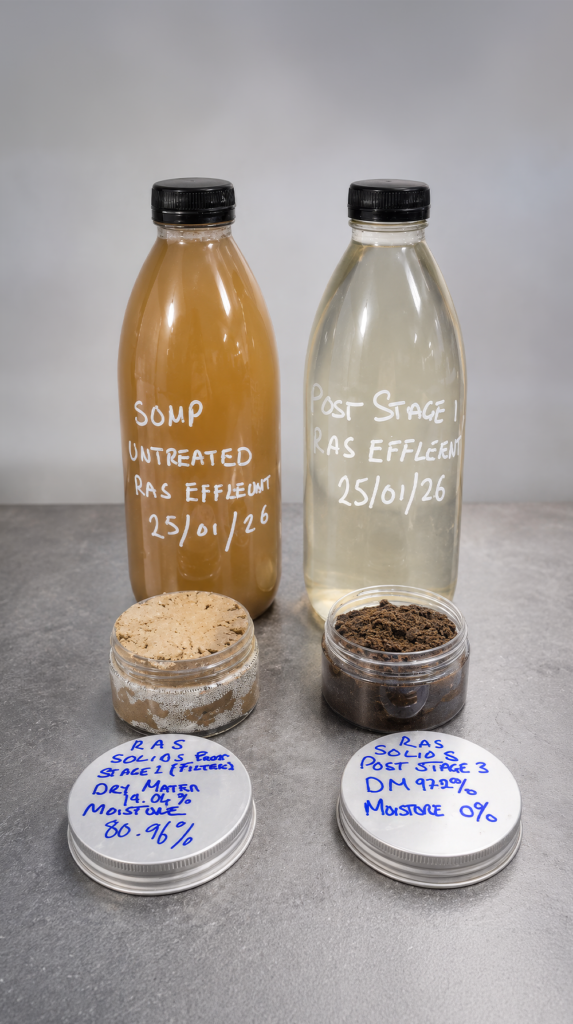
Through a staged process using hydraulic, mechanical, and thermal treatment, the Waste 2 Energy unit successfully processed waste sump water and produced two valuable outputs: discharge water and a reusable dry co-product.
The Challenge
Bio-waste streams from aquaculture and agricultural operations can be costly and difficult to manage. Wastewater and sludge often contain high volumes of water, suspended solids, organic material, and nutrients, creating pressure around storage, haulage, disposal, discharge, and operational expenditure.
For the client, the key challenge was to identify whether this waste stream could be treated on site rather than transported away as a disposal issue.
The project focused on three core questions:
- Could water be effectively separated from the bio-sludge?
- Could the process reduce reliance on chemicals and road haulage?
- Could the remaining solids be converted into a usable circular economy product?
The Solution
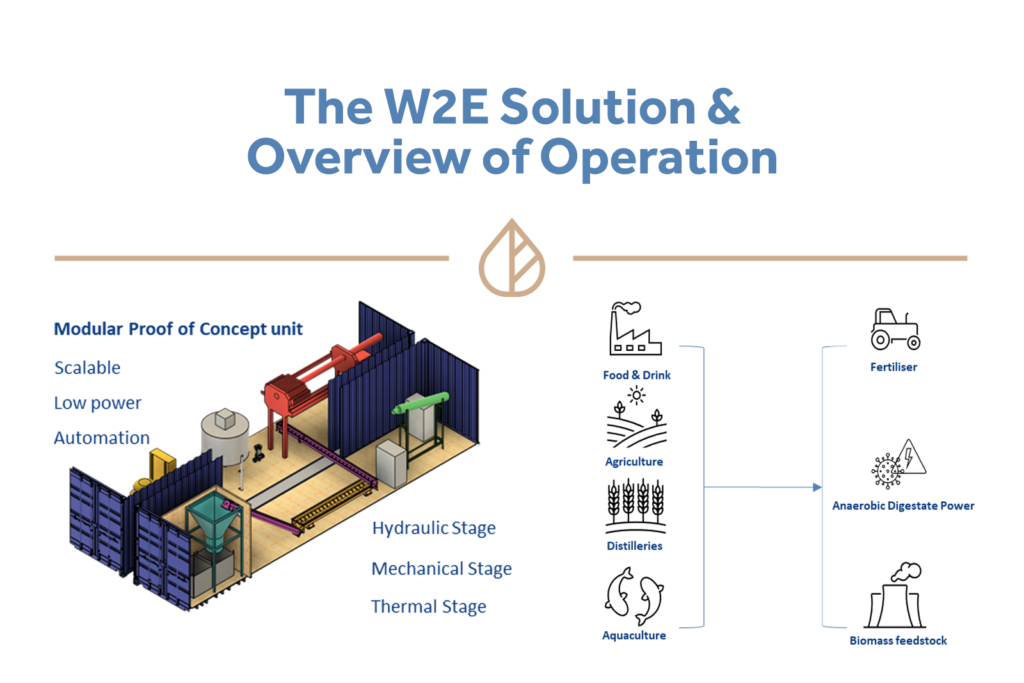
Sustainable Solutions assembled and sited a modular Waste 2 Energy proof of concept unit to process the client’s waste sump water.
The system was designed to treat the waste stream through three key stages:
Hydraulic Separation
The first stage separates larger particles, heavier material, and suspended solids from the incoming waste stream.
Mechanical Separation
The second stage further separates fine particles and supports the production of a cleaner treated water stream.
Thermal Process
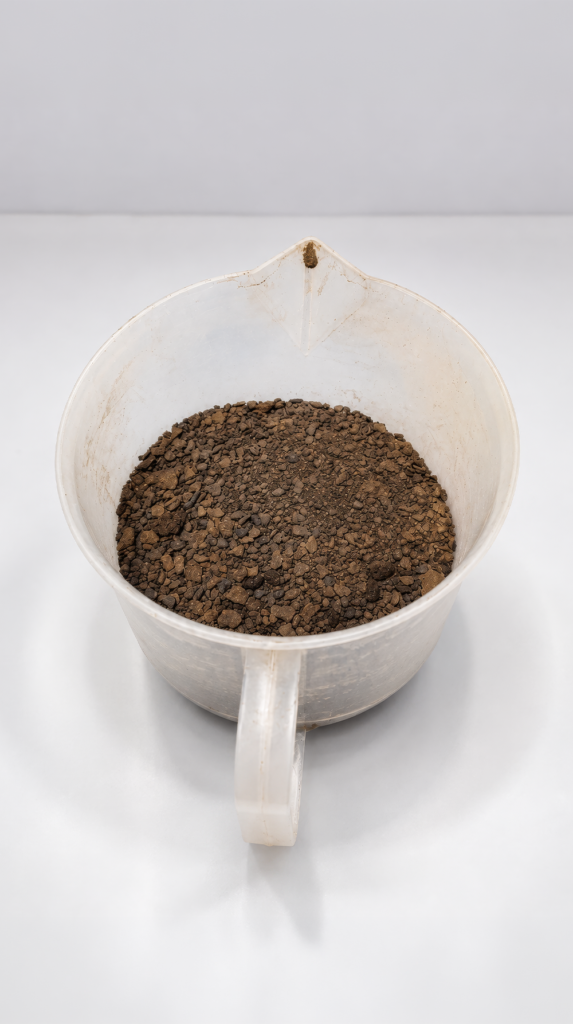
The retained bio-waste is then processed using thermal energy to reduce moisture and create a dry organic co-product.
This approach allowed the waste stream to be treated as a recoverable resource rather than a disposal burden.
The Outcome
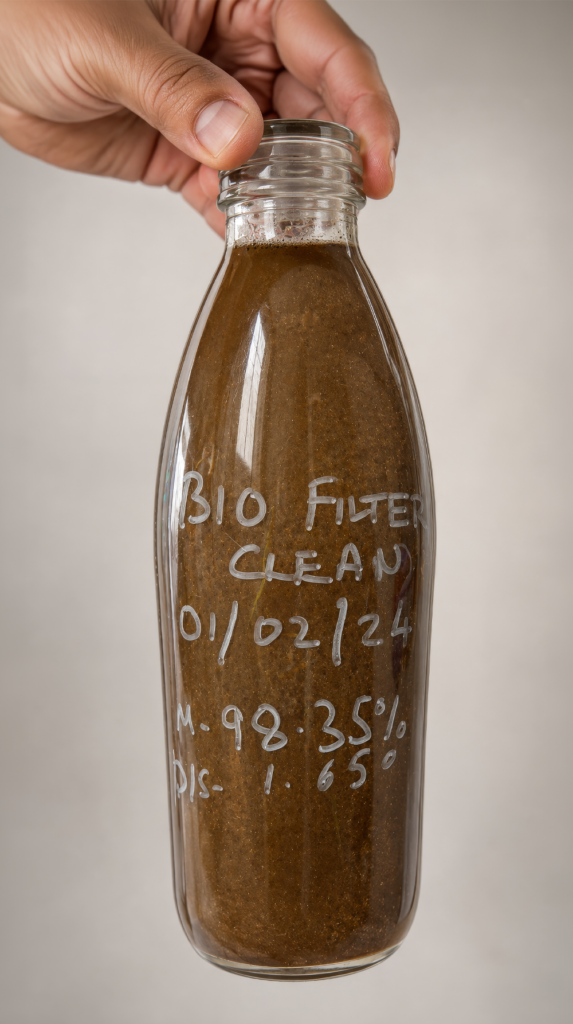
The proof of concept demonstrated that the Waste 2 Energy unit could successfully process bio-waste sump water and create a route towards circular resource recovery.
The process produced treated discharge water and a dry co-product with potential commercial use as fertiliser, biomass feedstock, or anaerobic digestate feedstock, subject to material quality, approvals, and end-use requirements.
Key outcomes included:
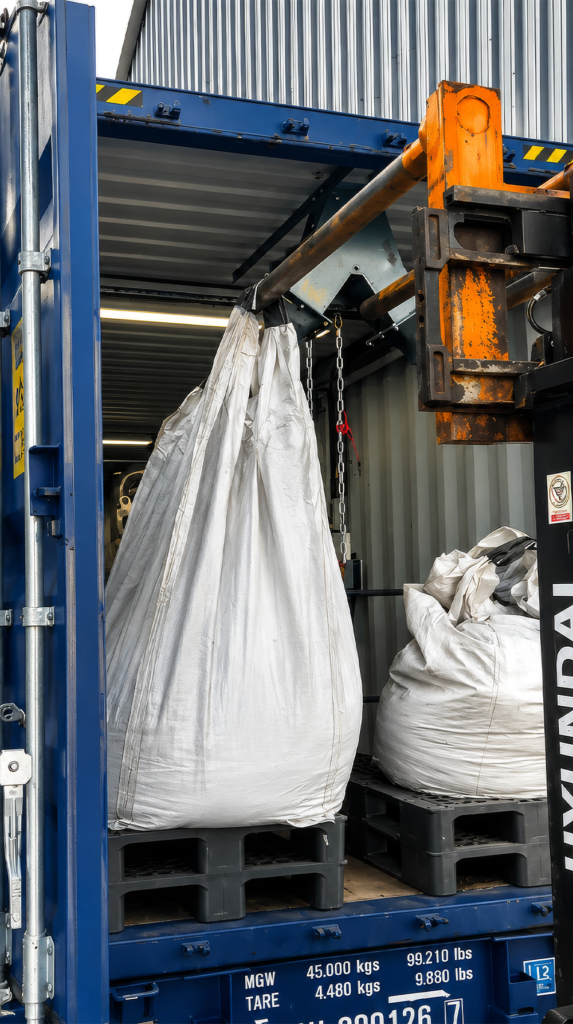
- Reduced reliance on road haulage for RAS and bio-waste streams.
- Improved management of waste solids and water.
- Reduced requirement for polymer chemical treatment.
- Potential operational cost savings.
- Support for consent to discharge requirements.
- Creation of a viable circular economy route from waste to co-product.
- Improved Scope 3 and greenhouse gas emissions performance through reduced transport and waste handling.
Circular Economy Impact
The project showed how bio-waste can be treated as a resource with recoverable value.
Instead of transporting wet waste away from site, the Waste 2 Energy unit provides a practical route to separate water, reduce waste volume, and convert organic solids into a more manageable and potentially valuable material.
For aquaculture, agriculture, food and drink, distilleries, and anaerobic digestate operations, this creates a stronger circular economy model where waste streams are treated, separated, and recovered closer to source.
Project Summary
Client: Scottish bio-waste client
Sector: Aquaculture and agriculture
Application: Waste sump water treatment and bio-sludge separation
Solution: Modular Waste 2 Energy proof of concept unit
Process: Hydraulic separation, mechanical separation, and thermal treatment
Outputs: Treated discharge water and reusable dry co-product
Value: Reduced waste handling, lower disposal pressure, chemical reduction, and circular economy recovery
Final Call to Action
Wastewater and bio-sludge do not have to remain a disposal problem.
Sustainable Solutions supports customers with on-site wastewater treatment and resource recovery through modular Waste 2 Energy systems designed to reduce waste, recover value, and support more sustainable operations.
For more information, contact:
sales@ss-ir.co.uk
www.ss-ir.co.uk